May 19, 2026
Dear readers,
Lots to cover on all things trust, accountability and inclusion related, including a focus this week on developments in Africa, but we start this week in the U.K.
While the news is centering on potential challenges to the Prime Minister, Peter Geoghan and Jenna Corderoy highlight a story that risks being lost in the shuffle. Promised action to combat frivolous SLAPP lawsuits has not materialized and there was no mention in last week’s King’s Speech detailing the latest legislative agenda. Geoghan and Corderoy worry that a lobbying campaign by lawyers for the super-rich has successfully thwarted reform, with global implications for independent media and civil society.
Happy reading!
TAI team
What's New
UNDP's new publication “Democracies Under Pressure: Reimagining the Future of Democracy in Latin America and the Caribbean 2026” offers a comprehensive look at democratic resilience in a region that remains the most democratic among developing regions, yet faces mounting tensions. The report proposes a roadmap for building state capacities that can anticipate risks, manage conflict, and deliver results.
Writing in Intercontinental Cry, Ashley Bell warns that lithium extraction projects in Argentina’s Jujuy province are violating the consent rights of the Kolla and Atacama peoples. As pressure for critical minerals intensifies, it calls for stronger protection of Indigenous land, water, and protest rights.
This recent learning brief from the Trust for Civic Life draws on grantmaking in rural USA to explore what local communities are actually experiencing with digital tools, AI, and civic technology. The findings offer a grounded counterpoint to more optimistic narratives about tech-enabled participation.
G7 Finance and Development Ministers reaffirm Domestic Resource Mobilization as a key and reliable source of development financing, stressing sound public finances, transparency, and efficient spending as essential to stability, fiscal sovereignty, accountability, and growth. The declaration largely restates existing positions and reiterates that partner countries should lead aid coordination.
A Carnegie Endowment analysis examines the real-world impact of the International Court of Justice's 2025 Advisory Opinion on climate change. While the opinion provided significant clarity on states' legal obligations, concrete policy advances have so far been limited, raising questions about accountability in an era of climate backslide.
A recent Oxford dialogue hosted by the Raintree Foundation and the Atlantic Institute on Landscapes of Justice linked community-led landscape regeneration with human dignity and ecological justice. Speakers including Rachel Kyte and Justin Adams argued that $7.3 trillion flowing annually into nature-destructive activities reflects deeper structural issues.
The Policy Practice has published a guidance note on stakeholder analysis and political network mapping, and argues that simpler approaches are often more effective. Applying an 80/20 lens, it suggests that most useful political insight comes from a small number of key relationships, and that mapping 6–10 actors can be more actionable than complex network visualizations.
Tim Hanstad argues in a LinkedIn essay that localizing philanthropy requires more than redirecting dollars. To unlock greater impact, the sector must also localize its perspective, rethinking who holds knowledge, sets priorities, and defines success. Tim offers steps for philanthropy to treat government as the key proximate actor to partner with.
Carnegie Endowment examines India’s stalled delimitation debate, noting that despite a population increase of nearly one billion since 1971, the parliamentary map has remained unchanged. The defeat of three delimitation bills in April has further intensified disputes over representation, regional power, and federal balance.
Writing in Stanford Social Innovation Review, author Mark Sidel argues that civil society organizations facing highly restrictive state environments can use compliance strategically, leveraging legal registration to pursue their goals and make themselves harder to suppress.
A Devex opinion piece by Sondang Sirait questions the development sector's pivot to digital-first communications. While online content reaches audiences faster, the real impact of these campaigns remains uncertain, and the piece cautions against mistaking cultural fluency for genuine engagement.
Subscribe to the Collaborative for a Gender-Just Economy’s monthly newsletter and join a growing learning community where funders and practitioners exchange ideas on gender and the economy, explore new approaches, and build cross-sector connections for transformative economic change.
From Our Members
MACARTHUR FOUNDATION: Has announced $18 million in new grants through Humanity AI, a collaborative philanthropic initiative dedicated to ensuring artificial intelligence serves the public good. Eight million dollars has been awarded to organizations working to put people first in AI development, with a $10 million open call to follow.
PACKARD FOUNDATION: Has published its 2025 Impact Report, offering a look at a year of grantmaking that reached leaders and organizations across the United States and around the world, working on some of the most complex and urgent challenges of our time.
TAI SECRETARIAT: Has concluded the 2026 Staff Retreat in Chinchón, Spain, after two days of intensive workshops focused on strengthening cross-cutting connections across thematic areas and workstreams. Discussions explored how to better integrate team projects, enhance communications for greater influence, improve monitoring, learning and evaluation processes, and deepen shared understanding of each other’s thematic areas.
ESSENTIAL LISTENING:
Mali often makes headlines for coups, instability, and shifting geopolitical alliances. This conversation with Prof. Youba Sokona of African Tech Futures Labs, one of Africa’s leading voices on energy, climate, and development, offers a different perspective, reflecting on what building African capacity truly requires.
TOOLS AND TRENDS FOR FUNDERS
David Callahan says in Inside Philanthropy that the sector is largely failing to address escalating wealth inequality. Wealthy donors and foundations, he contends, tend to prioritize elite causes, personal influence, and prestige over systemic changes that would redistribute wealth or challenge structural inequities.
An Alliance magazine piece by Kindred Motes examines the growing role of family offices in shaping public outcomes, and asks why accountability and legitimacy have not kept pace with their influence.
Even as compliance tightens at many foundations, Alex Daniels writes in The Chronicle of Philanthropy that program officers are increasingly valued for their listening and problem-solving skills, a signal that the sector recognizes relationship-building as central to effectiveness.
Tim Mueller and Ida Kenny argue that philanthropic intermediaries are more central to the global philanthropy ecosystem than often acknowledged, and play a critical role in enabling effective climate action. The authors make a clear case for their continued importance across the sector. See also TAI’s work on rethinking intermediaries.
ESSENTIAL WATCHING:
Watch this discussion on the threat of the U.S. federal government seeking to use nonprofit status as a lever of political control - a tactic familiar in many countries. MacArthur Foundation President John Palfrey is among those discussing the importance of philanthropic freedom and what’s at stake when the state asserts authority over private giving.
Focused Topic of the Week
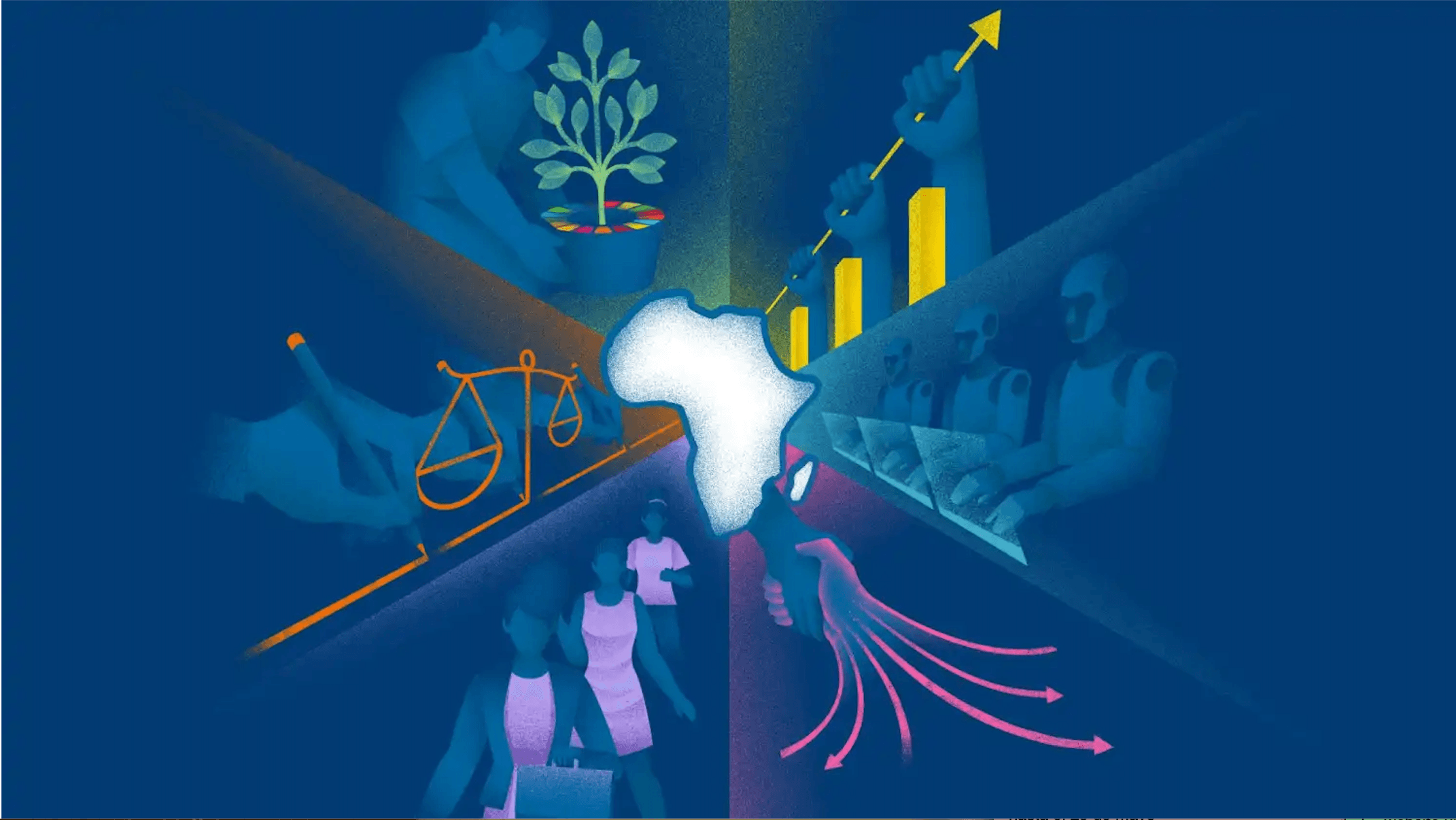
Africa in the Balance: Governance, Accountability, and the Struggle for Open Societies
Africa stands at a crossroads where governance, transparency, and civic space are being simultaneously tested and reimagined. The continent's engagement with global systems has never been more consequential: as international aid declines and competition for critical minerals intensifies, the inaugural Africa Political Outlook Annual Report argues that Africa must seize this moment to redefine both its relationship with the world and the internal engines of its own transformation. That redefinition, however, is unfolding against a backdrop of deep structural tensions: between accountability and impunity, openness and restriction, collaboration and repression.
The promise of transparent governance is real, but so are its limits. Nigeria's NOCOPO platform stands as a striking proof of concept: by publishing contract data across more than 700 ministries, departments, and agencies in a standardized, machine-readable format — developed through genuine co-creation between government and civil society via the Open Government Partnership — the Bureau of Public Procurement reported savings of 173 billion naira in just the first half of 2025. Yet this kind of institutional ambition is harder to sustain where legal frameworks exist in name but not in practice. Transparency International's analysis of eight countries across the Middle East and North Africa finds that corrupt assets routinely cross borders before authorities can respond, exploiting data gaps and enforcement weaknesses even where laws nominally prohibit it. A warning that architecture without accountability changes little.
Civil society, the connective tissue of any functioning democratic ecosystem, faces mounting pressure across the continent. Freedom House documented 126 transnational repression incidents in 2025, with a significant concentration in East Africa, pointing to an increasingly normalized pattern of authoritarian collaboration that reaches across borders to silence dissent. Uganda's recently passed foreign funding bill, though less extreme than its original draft, illustrates how legislative ambiguity can itself become a tool of control. The chilling effect on civil society and private sector funding persists even when the sharpest edges of a law are softened. The question is not merely what the law says, but what it makes people afraid to do.
ESSENTIAL READING:
The English edition of Andrea Illy’s “The Regenerative Society: A New Paradigm of Progress”, published by Bocconi University Press, is now available. It argues for a shift from extractive to regenerative economic models, noting that regenerative companies already outperform traditional ones, and that the challenge lies in scaling the transition.
JOBS
Multiple openings - Hewlett Foundation
Multiple openings - MacArthur Foundation
Multiple Openings - Gates Foundation
Multiple Openings - Social Action, Development Cooperation, Culture, Disability, and Health Sectors in Spain
Multiple Openings - UNCAC Coalition
Internships - International Accountability Project
Director of Global Affairs - Sequoia Climate Foundation
Director, Strategic Communications Network – Global Fund for a New Economy (GFNE).
Policy Advisor for Natural Resource Justice - Oxfam America
Senior Director, Critical Minerals and Community Positive Energy Transition, World Wildlife Fund
Business Development Manager - Westminster Foundation for Democracy. Deadline: May 25, 2026.
Chief Executive Officer - Global Witness. Deadline: May 29, 2026.
CALLS
The Open Government Partnership is seeking new members for the Independent Reporting Mechanism's International Experts Panel.
Tax Justice Network Africa is looking for a consultant to design a Gender Framework for Health Tax Advocacy, with a country-specific focus across Africa.
The American University Washington College of Law is accepting applications for its 2026 Summer Anti-Corruption Law Certificate Program (June 1–4 and 8–11, in person and remote). Four courses are on offer, covering bribery law and compliance, cryptocurrency and illicit finance, anti-corruption legal frameworks, and AI, with discounted rates for NGO, academic, and government participants, and limited tuition assistance available.
The European Endowment for Democracy provides rolling funding for local democracy organizations in the Eastern Partnership, Middle East and North Africa, and Western Balkans & Turkey.
The Fifth Element invites blog contributions on systems transformation from practitioners and researchers, drawing on both lived experience and analysis across diverse perspectives.
African Feminist Macroeconomy Academy (AFMA) 2026 is accepting applications for a five-day residential program bringing together activists, organizers, researchers, and advocates across Africa under the theme “Feminist Futures of Work: Building Power for Labour Justice in the Digital Age.” Deadline: May 24, 2026.
UNDP is seeking a Consultant to support global follow-up to the Fourth International Conference on Financing for Development (FfD4).
The UK government has opened a Call for Evidence for its next National Action Plan on Open Government, offering a key opportunity for civil society input. The UK Open Government Civil Society Network has published a submission guide. Deadline: May 25, 2026.
The National Endowment for Democracy offers grants to advance democratic goals and strengthen democratic institutions. Deadline: June 6, 2026.
The Political Economy Analysis in Action online training course runs from September to December 2026. Register before June 13 to benefit from the early bird discount.
Thousand Currents will host its first Academy in the Global South this August in Brazil, focused on internationalism and global solidarity, including immersive engagement with social movements shaping transformative change. August 2-7, 2026 | São Paulo, Brazil.
CALENDAR
Rabat, Morocco: On Think Tanks Conference, focusing on "Think Tanks and Trust." 19–21 May 2026.
Towards Meaningful Action: NGOs' Responses to Threats from Far-Right Authoritarianism. May 20, online.
Beneath the Surface: Addressing Information Challenges in Africa’s Critical Mineral Sector, Stimson Center Webinar, May 22, 10am EST
Second session of UNDP's webinar series Civic Engagement in the Digital Age, co-organized with Democracy X. May 26, 8:00–9:30 PM EST.
10th Global Solutions Summit 2026, Berlin. June 1-2, 2026.
Oslo Freedom Forum, Oslo, Norway. June 1-3, 2026.
People Powered webinar on Climate Democracy in Action on June 2, 2026
Addis Tax Initiative webinar, “Making green tax incentives work: protecting revenue while accelerating the energy transition.” June 2, 2026, 13:00–14:30 CEST.
First European Forum on Environmental Human Rights Defenders. Strasbourg, France, June 3–4, 2026.
Rogue Union Foresight Retreat for philanthropy leaders. June 7-11.
Asia Clean Energy Forum. Manila, Philippines, June 8–11, 2026.
Designing Democratic Resilience, EPD Annual Conference 2026. Brussels, June 9, 2026.
GDC Asia Forum 2026, Global Democracy Coalition. June 11, 2026 | Seoul, South Korea.
IAFFE Annual Conference. June 25–26, 2026 (online) | July 9–11, 2026 (in person) | Cali, Colombia.
WINGSForum 2026 in Montreal under the theme "ACT – Activate, Collaborate, Transcend." Save the date, more details to follow in early 2026. September 28-30, 2026.
Better Politics Foundation Flagship Gathering - Brussels, November 18–20, 2026.
International Anti-Corruption Conference (IACC) in Punta Cana, Dominican Republic. December 1-4, 2026.
We’d love to hear from you on how we can further improve TAI Weekly to better serve your needs in program management on the transparency, accountability, improved grantmaking and civic space. Please direct your feedback to [email protected] or